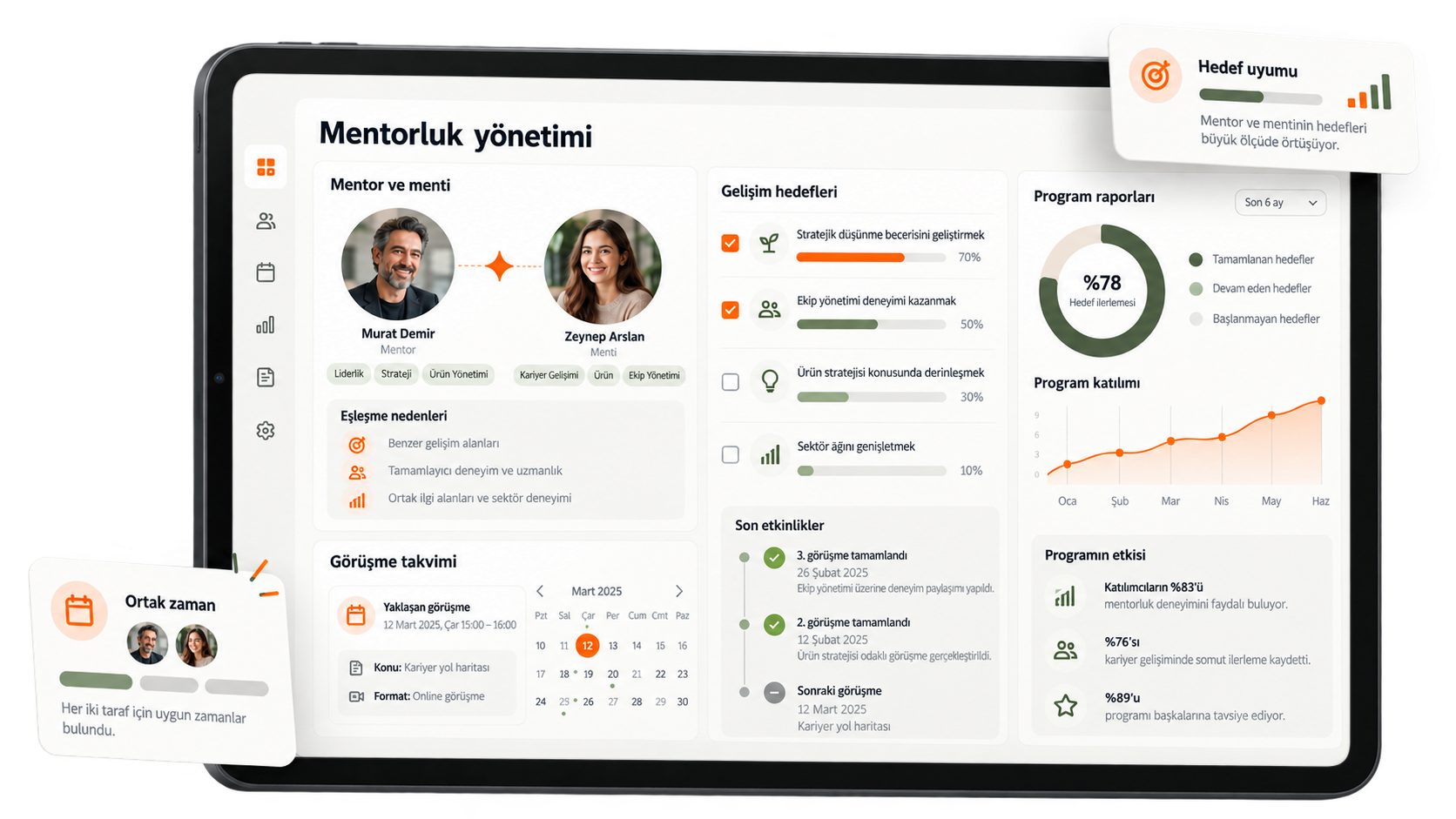
Example scenario. A first-time manager wants a mentor for a difficult feedback conversation. One candidate has experience in the same sector but works a different shift. The other has handled similar conversations and can meet regularly. Which match will actually help the manager make progress?
What research shows about mentoring
Thrive treats mentoring and coaching as a distinct topic in its learning coverage. To evaluate a programme, define the goal, meeting frequency and feedback plan alongside the matching process.
A workplace example
A first-time manager wants to improve difficult feedback conversations. Identify mentors with comparable team experience, regular availability and no conflict of interest.
Why a promising match may not work
A mentor may bring extensive leadership experience. A mentee may need support with early team meetings and difficult feedback. The match looks relevant, but opposite shifts may prevent regular conversations. Review relevance and practical availability separately.
Eby and colleagues’ meta-analysis associated mentoring with a range of favourable outcomes, generally with small effects. It did not evaluate AI matching. Review meeting continuity and evidence of progress rather than using the number of matches as a success measure.
A matching checklist
| Criterion | Evidence | Programme manager check |
|---|---|---|
| Goal fit | Mentor has experience with a comparable task | Is it relevant to the mentee’s goal? |
| Availability | Both participants share a regular time slot | Can sessions actually be scheduled? |
| Working boundaries | Both understand expectations | Is there a conflict of interest or role overlap? |
- Write down the goal
- Compare candidates against criteria
- Review the match with a manager
- Agree a goal at the first meeting
- Check progress
Plan the first two meetings
At the first meeting, have the mentee describe a case and what they would like to change. The mentor might suggest rehearsing the opening of a conversation. At the second meeting, review where the mentee tried that approach and what support they still need.
Separate two measures at the end. Completed meetings indicate that the programme is running. Progress on the target behaviour needs evidence from tasks and feedback. Reviewing both provides a better basis for discussing the next round of matches.
Check the match in the first session
Go beyond introductions. The mentee can describe a feedback conversation they will have this month. Ask them to explain their intended approach and agree on one rehearsal task. End the meeting with a date for the next conversation and a clear action to take before then.
Collect feedback from both participants using the same questions. Is the goal still relevant? Can they keep the meeting schedule? Do the examples match the work? If scheduling is the issue, find a common slot first. If the goal and experience do not fit, the programme manager can consider a new match.
Make the matching decision explainable
Ask the programme manager to record a short reason for each recommendation. “This mentor has worked with new managers and can meet during their shared time slot” makes the criteria visible. Give the mentee a chance to confirm the goal and expectations. A shared objective gives both people a basis for discussing progress later.
Check in at week four. Are sessions taking place? Has the mentee tried the agreed task? If the goal changed, why? These answers help the programme manager distinguish a scheduling or communication issue from one that calls for a different match.
How to apply it with COBIDU
Record development goals and competency needs in COBIDU MentorHub. Ask the programme manager to review AI-assisted recommendations. Collect feedback from both participants throughout the programme. At the end, review progress towards goals and participation alongside the number of matches.
Completed meetings tell us how the programme ran. A follow-up plan helps assess whether the intended behaviour appears at work.